

Garage Door Won’t Close in Cold Weather? What Chicago Homeowners Should Check
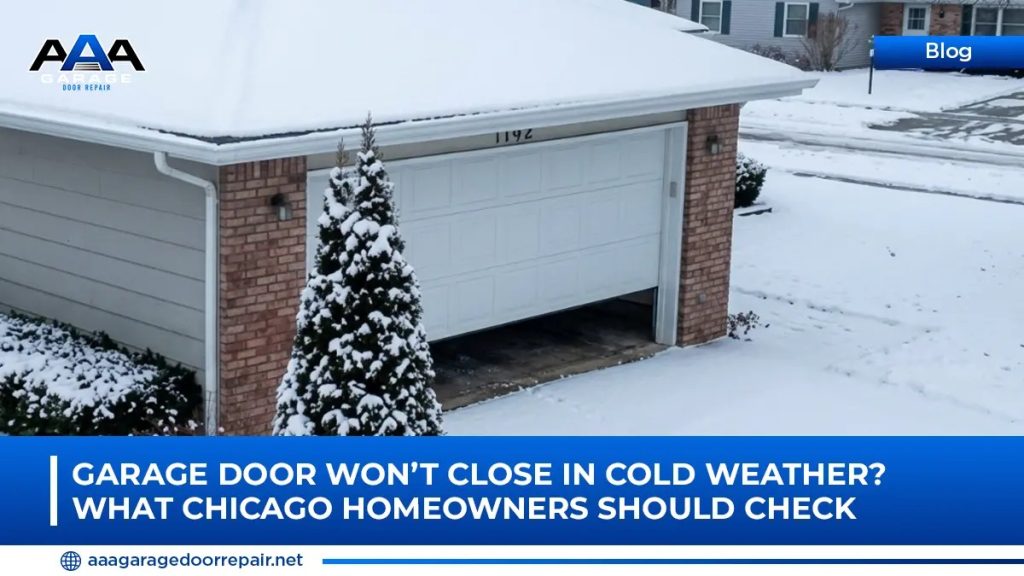
Chicago-area winters can expose garage door problems that barely showed up during milder weather. A door that closed normally in October may begin reversing, stopping above the floor, dragging along one side, or refusing to move after a hard freeze. Cold weather is not always the root cause, but it can make an already marginal part or adjustment much more noticeable.
If your garage door will not close during freezing weather, start with simple visual checks that do not require touching springs, cables, or bottom brackets. If the door is crooked, mechanically jammed, or unable to secure the garage, stop operating it and arrange repair.
Cold Weather Can Reveal Problems That Were Already Developing
Metal components contract slightly in low temperatures, lubricants can become less effective, rubber seals stiffen, and snow or ice can collect around the opening. A door with worn rollers, loose hardware, weak spring balance, or borderline sensor alignment may therefore behave worse on a very cold morning than it did the day before.
This is why a winter closing problem should not automatically be blamed on “the cold.” The temperature may simply be exposing a mechanical or electrical issue that deserves attention. In that case, regular check-ups will help you identify underlying problems and fix them before they worsen.
Six Things to Check Before You Keep Pressing the Button
1. Look for snow, ice, tools, boxes, or other objects in the doorway and along the bottom seal.
2. Check whether both photo-eye sensors are still aimed at one another and whether their lenses are clean.
3. Look for frozen slush or debris along the lower track area without putting your hands near moving hardware.
4. Watch whether the door starts down evenly or one side hesitates.
5. Listen for a new grinding, popping, or scraping sound that suggests mechanical resistance.
6. Check whether the bottom seal is frozen to the floor before trying to open a door that has been sitting closed.
If the door is visibly uneven or the opener strains, stop there. Continuing to cycle it can turn a minor winter problem into track, cable, panel, or opener damage.
Garage Door Care: Essential Reminders for the Winter
When it comes to keeping your garage door in optimal condition for the winter, having the right knowledge makes all the difference. Here’s what you need to remember as you prepare for lower temperatures this season.
Photo-Eye Sensors Can Cause a Door to Reverse in Winter
Modern openers use external entrapment-protection devices near the bottom of the opening. If a sensor is dirty, knocked out of alignment, blocked by packed snow, or affected by a wiring problem, the opener may refuse to close normally or may reverse soon after it begins moving down.
Do not bypass the safety system to make the door close. Clean only the exposed lens gently and remove obvious obstructions. If the lights continue blinking or the door still reverses, AAA’s opener repair service can check sensor alignment, wiring, travel limits, and the opener itself.
A Bottom Seal Frozen to the Floor Can Overload the Opener
After melting snow refreezes, the bottom weather seal can stick to concrete or asphalt. If the opener tries to pull the door upward while the seal is frozen in place, the top section and opener hardware can take more load than they should.
Do not keep pressing the remote to break the door loose. Clear loose snow around the threshold and allow the ice to release without prying on the panels or pulling against the opener. If the seal is torn, hardened, or no longer sits evenly, include it in the next maintenance and tune-up visit so the door can close cleanly again.
When Cold Weather Points to a Spring or Balance Problem
A spring does not have to break completely before the door starts feeling wrong. If the door is poorly balanced, the opener may slow down, stop short, or reverse because it is fighting more resistance. Cold conditions can make that weakness easier to notice.
DASMA’s garage door safety guidance notes that a struggling door can indicate an unsafe spring-balance condition and that spring systems should be repaired by trained technicians. If the door suddenly becomes heavy or difficult to control, avoid DIY spring adjustments.
Winter Warning Signs That Deserve Professional Repair
Additionally, you need to look for issues that can’t be dealt with using DIY approaches.
- The door closes crooked or one side reaches the floor first.
- A cable is loose or a roller is partly outside the track.
- The door stops in the same place on every cycle.
- The opener hums but the door barely moves.
- The door will not stay closed or cannot secure the garage.
- A spring has a visible gap or the door suddenly feels much heavier.
- The track is bent, shifted, or packed with damage rather than simple loose debris.
Why a Winter Tune-Up Can Be More Useful Than Random Adjustments
Homeowners sometimes respond to a winter problem by increasing opener force, spraying lubricant everywhere, or moving the sensors until the door finally closes. Those changes can hide the symptom without correcting the reason the door became difficult to move.
A proper inspection can separate sensor trouble from mechanical resistance. The technician can check balance, springs, cables, rollers, hinges, track fasteners, opener settings, and the condition of the weather seal, then make only the adjustments the system actually needs.
AAA Serves Park Ridge, Chicago, and Nearby Communities Through Winter
AAA Garage Door Repair provides service throughout Park Ridge, Chicago, and surrounding Illinois communities, including northwest-suburban areas where winter temperature swings can be hard on garage-door hardware. Review AAA’s service areas or request service directly if the door is no longer closing reliably.
If the garage is stuck open during freezing weather or the door is unsafe to operate, use AAA’s 24/7 emergency repair service rather than leaving the opening unsecured.
Final Takeaway
Cold weather can stiffen seals, expose weak balance, interfere with dirty or misaligned sensors, and turn small track or roller problems into obvious resistance. Start with simple visual checks, but do not bypass safety features or force a frozen or crooked door. If the garage door still will not close normally, have the system inspected before repeated opener cycles cause additional damage.
Guide did not fix it?