


Garage Door Hinges and Brackets: Small Parts That Can Cause Big Problems
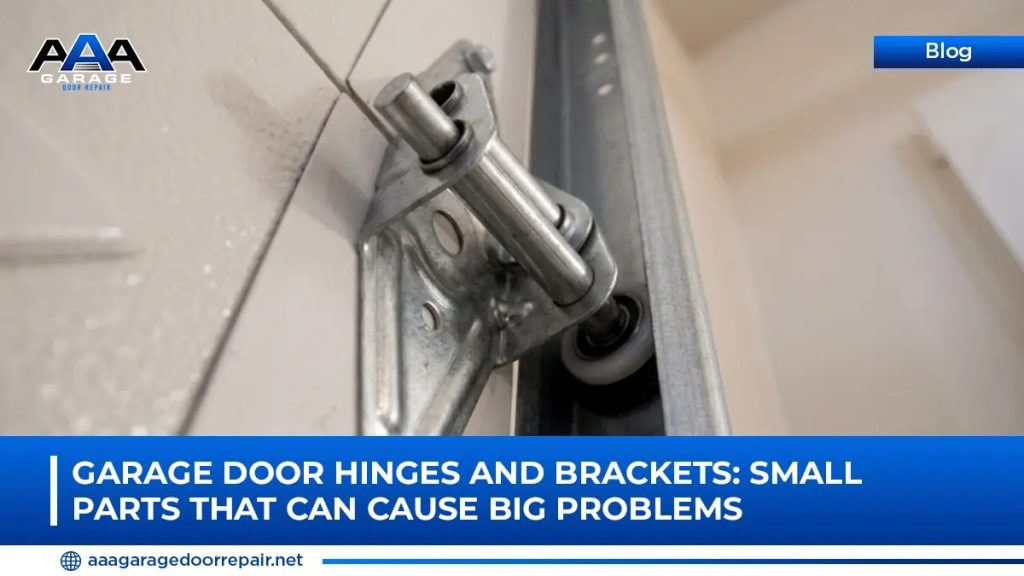
Springs, cables, tracks, and openers get most of the attention when a garage door acts up, but the hinges and brackets connecting the sections are just as important to smooth movement. These smaller parts allow the panels to pivot as the door travels from vertical to horizontal. When they loosen, crack, bend, or pull away from the door, the entire system can become noisy and unstable.
For homeowners in Park Ridge and the greater Chicago area, hinge and bracket wear often starts as a rattle or pop that is easy to ignore. Catching the problem early can prevent damaged rollers, enlarged screw holes, cracked sections, and additional stress on the opener.
What Garage Door Hinges and Brackets Actually Do
Sectional garage doors bend at each joint as they follow the curved part of the track. Hinges connect the sections while allowing that controlled movement. Many hinges also support roller stems, which means a worn hinge can affect how the roller sits inside the track.
Brackets secure other parts of the system to the door, wall, track, or ceiling. Some are ordinary supports; others are associated with cables or spring tension. That distinction matters because not every loose fastener is safe for a homeowner to adjust.
Warning Signs of Hinge or Bracket Trouble
In any case, if you notice any of the issues below, you could be dealing with damages to your hinge or bracket.
- A repeated pop or click comes from the same section as the door bends.
- A hinge looks cracked, bent, twisted, or separated from the panel.
- Screws keep loosening around the same hinge or bracket.
- A roller stem has excessive side-to-side movement.
- One panel flexes more than the sections around it.
- The door rattles or vibrates even though the track looks straight.
- The door begins rubbing the track or shifting sideways during travel.
Any visible crack in a hinge or support point deserves attention. A door can continue moving with damaged hardware, but each cycle may enlarge the problem and spread stress into the panel or roller assembly.
When to Stop Using the Door
As you repair your garage door, you will need to back away if you notice these problems to prevent possible injury.
- A hinge is visibly split or pulled away from the panel.
- A roller is coming out of the track.
- A bracket connected to a cable or bottom corner looks loose.
- The door twists or bends noticeably while moving.
- A section is cracked around the hinge mounting point.
- The door produces a sudden loud pop followed by crooked movement.
If the door appears unstable, do not keep cycling it to identify the noise. Leave it in the safest position available and arrange service. If the garage cannot be secured or the door is hanging dangerously, AAA’s emergency repair team is available around the clock.
Why Loose Hardware Is Not Always a Simple DIY Tightening Job
Some accessible hinge screws can look harmless, but the garage door is a loaded moving system. Tightening a screw into damaged material may not restore the original strength, and over-tightening can strip the hole or deform a thin metal section. A fastener that repeatedly works loose may be showing that the hinge, panel, roller, or alignment is already under abnormal stress.
More importantly, bottom brackets and certain cable attachment points can be connected to high spring tension. The Door & Access Systems Manufacturers Association warns against loosening or adjusting bottom brackets and other tension-related components in its garage door system safety guidance. When the location or purpose of a bracket is unclear, leave it alone.
How a Damaged Hinge Can Affect the Rollers and Tracks
A roller needs to enter and travel through the track at the correct angle. If the hinge holding that roller bends or pulls away from the panel, the roller can tilt, drag, or press against the track. The door may then shake, scrape, or hesitate around the curved section.
That extra resistance can make the opener sound louder and can loosen nearby fasteners. If the problem continues, a roller may wear prematurely or the track may be forced out of alignment. AAA’s garage door repair service checks the connected parts rather than treating the noisy hinge as an isolated component.
When the Panel Is Part of the Problem
Sometimes the hinge itself is not the only damaged piece. If the metal or composite material around the mounting points is cracked, torn, rusted, or badly deformed, simply installing a new hinge may not provide a durable repair.
A technician may need to reinforce the section or determine whether the damaged section should be replaced. AAA offers section and panel replacement when a localized section can be repaired without replacing the entire garage door.
What a Technician Checks During a Hinge and Bracket Inspection
When you call a garage door specialist, they will check essential parts and determine the right solutions needed by each .
1. Inspect each hinge for cracks, distortion, loose fasteners, and worn pivot points.
2. Check the roller stems and wheels connected to the hinges.
3. Look for panel damage around screw and bolt locations.
4. Confirm that the vertical, curved, and horizontal track sections remain aligned.
5. Inspect nearby brackets and supports for movement or fatigue.
6. Run the door through a complete cycle and listen for changes at each section joint.
7. Verify balance and opener operation so the repaired hardware is not immediately stressed again.
Maintenance Can Catch Hardware Wear Before It Becomes a Breakdown
Loose fasteners, dry pivot points, and developing cracks are easier to address before a hinge fails completely. During an AAA maintenance and tune-up, the door can be checked from top fixtures to bottom hardware while its balance, rollers, safety systems, and opener operation are also evaluated.
That wider inspection is useful because hinge damage can be a symptom of another issue. A door that is out of balance, rubbing a track, or being pulled unevenly by the opener may continue damaging new hardware unless the underlying cause is corrected.
Call AAA Garage Door Repair for Noisy or Loose Door Hardware
AAA Garage Door Repair serves Park Ridge, Chicago, and nearby Illinois communities with repair for hinges, rollers, tracks, cables, springs, panels, and openers. If the door has developed a new popping sound, visible hardware damage, or repeated looseness around the same section, schedule an inspection before the problem spreads.
You can contact AAA Garage Door Repair with a description of the noise and where it seems to come from. Photos of visible hinge or panel damage can also help explain what the technician should expect before arrival.
Final Takeaway
Garage door hinges and brackets may be small, but they control how sections pivot, how rollers stay aligned, and how forces move through the door. Cracks, repeated loose screws, bending, or popping sounds are worth checking early. Avoid adjusting any hardware connected to high-tension cables or springs, and have the full system inspected when a hinge problem begins affecting door alignment or stability.
Guide did not fix it?