


How to Use a Garage Door Emergency Release Safely During a Power Outage
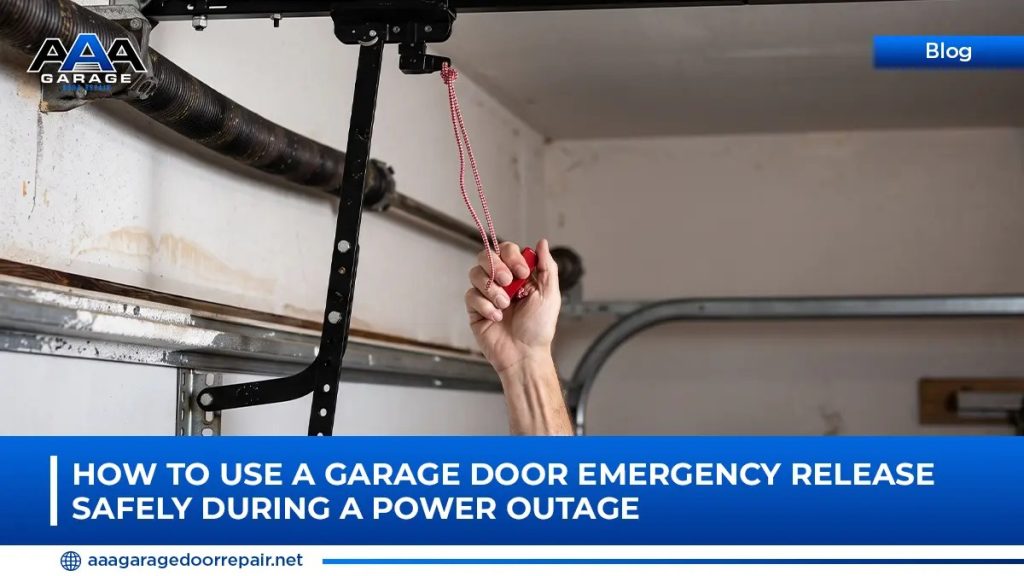
The red emergency-release cord is one of the simplest parts of a garage door opener, yet many homeowners never use it until the power goes out. Pulling the release disconnects the opener trolley so the door can be moved manually. That sounds straightforward, but the safety of manual operation depends on the condition of the garage door itself.
If a spring is broken, a cable is damaged, or the door is off track, disconnecting the opener can allow the door to move unexpectedly. AAA Garage Door Repair provides 24/7 garage door service across Illinois for situations where access, safety, or security is affected.
What the Emergency Release Actually Does
The release mechanism separates the door from the powered trolley or carriage. It does not remove the weight of the door, repair a broken spring, or correct damaged tracks.
A properly balanced garage door should be manageable during manual operation. An unbalanced door can feel extremely heavy or may not stay in position.
Why a Broken Spring Changes Everything
Garage door springs offset much of the door’s weight. When a spring fails, the opener may stop lifting the door or the door may feel far heavier than expected once disconnected.
Trying to lift a heavy door manually can lead to sudden dropping or loss of control. If the door will not move with reasonable, controlled effort, leave it in place and call for service.
Safety Features Still Matter After the Power Returns
Once utility power is restored, follow the opener manufacturer’s instructions for re-engaging the trolley. Do not force the carriage back together or repeatedly cycle the opener if it fails to reconnect.
The U.S. Consumer Product Safety Commission provides information about the federal safety standard for automatic residential garage door operators. Its garage door operator guidance is a useful context for why safe reversal and proper operation should be confirmed after troubleshooting.
Do’s and Don’ts: How to Operate Your Garage Door Safely
If you’re not sure how to use your garage door when the power’s out, it’s important to do it without much let-up and risk. Here’s a set of essential advice to prevent unwanted accidents and costlier repairs.
What to Do Before Pulling the Release Cord
Check the condition of the door first. If the door is raised, crooked, or visibly damaged, do not pull the release simply because the opener stopped working.
- Keep people and pets away from the door opening.
- Look for loose or broken cables from a safe distance.
- Do not stand underneath a partially open door.
- Avoid manual operation if the door is off track or hanging unevenly.
- Confirm the outage is actually the reason the opener has no power.
- Use another safe entrance if the overhead door cannot be moved safely.
The release is an access feature, not an emergency repair tool.
Do Not Pull the Release on an Unstable Raised Door
A raised door with damaged lifting hardware may be relying on the opener to stay in position. Disconnecting the trolley can remove that support.
If the door is already suspended, crooked, or making unusual sounds, keep clear and wait for a technician rather than testing the manual release.
What If the Door Is Stuck Closed and the Car Is Inside?
Access is frustrating, but urgency does not make unsafe lifting a good idea. If the spring or cable system is damaged, forcing the door can bend tracks, damage panels, or create a sudden drop hazard.
AAA’s garage door services include emergency repair, spring replacement, cables, rollers, and section work. A technician can determine whether the door can be safely opened for vehicle access before completing the full repair.
Test the System Before You Need It
You do not need to wait for an outage to learn how your opener works. Read the manufacturer’s manual and understand where the release is located.
During normal maintenance, ask a technician to confirm that the door is balanced and that the release mechanism is in good condition.
Do not practice by disconnecting a door that already feels heavy, moves unevenly, or has visible spring or cable issues.
Final Takeaway
The emergency-release cord is useful during a power outage, but it is safe only when the garage door is stable and mechanically sound. It disconnects the opener; it does not make a damaged door safe to lift.
If the door is heavy, crooked, off track, or affected by broken springs or cables, contact AAA Garage Door Repair for professional help rather than forcing manual operation.
Guide did not fix it?