


A Complete Seasonal Garage Door Maintenance Checklist
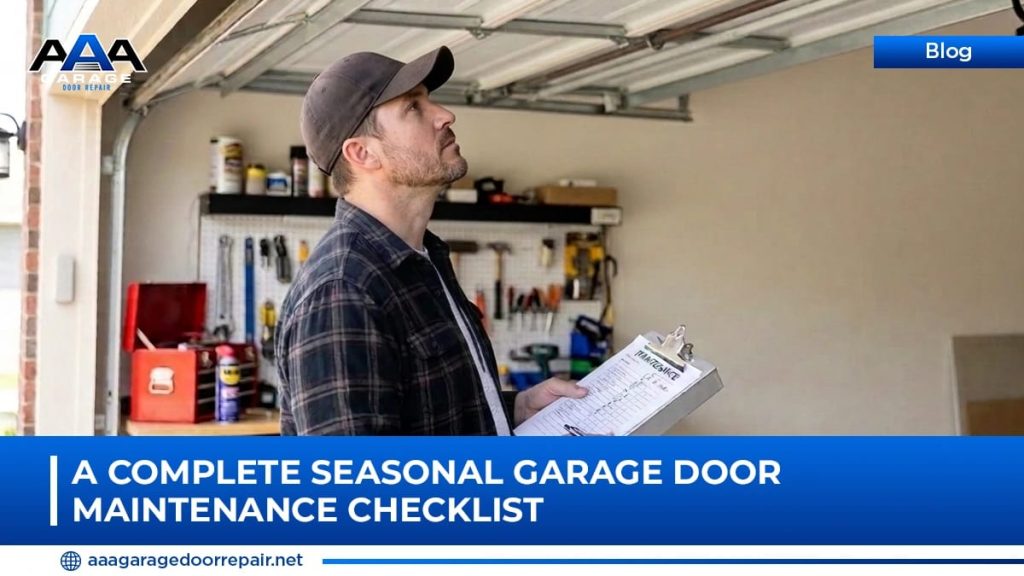
Regular garage door maintenance is essential for keeping your door safe, reliable, and operating smoothly throughout the year. Changes in temperature, humidity, and weather conditions can affect your garage door’s springs, rollers, tracks, and other components, potentially leading to wear and unexpected breakdowns. By performing routine inspections and addressing minor issues early, you can extend your garage door’s lifespan and avoid costly repairs.
In this guide, we’ll walk you through a complete seasonal garage door maintenance checklist to help you keep your door in top condition and maintain its performance in every season.
Seasonal Garage Door Maintenance: Why Do It in the First Place?
According to Finance Buzz, about 60% of homeowners say they put off necessary home repairs and maintenance, leading to an average cost of $5,650 in repairs that should’ve cost them less if they had dealt with them sooner.
Much like any other home maintenance task, regular garage door inspections and preventive care allow you to identify potential problems early before they turn into costly repairs. Seasonal garage door maintenance also helps keep your door functioning safely and efficiently throughout the year. Exposure to changing weather conditions, moisture, dust, and daily wear can gradually affect its components, leading to noisy operation, reduced performance, or unexpected malfunctions.
By following a seasonal maintenance routine, you can protect your investment, maintain smooth operation, and reduce the risk of inconvenient garage door problems when you need it most.
Garage Door Maintenance Essentials
Keeping your garage door in good condition requires regular attention to its key components, regardless of the season. Simple maintenance tasks, such as inspecting hardware, cleaning tracks, lubricating moving parts, and testing safety features, can help prevent unexpected breakdowns and ensure smooth, reliable operation. By making these tasks part of your seasonal routine, you can identify potential issues early, improve safety, and extend the lifespan of your garage door.
Inspect the Garage Door and Its Hardware
- Check the door panels for dents, cracks, rust, or other damage.
- Inspect hinges, brackets, rollers, and visible fasteners.
- Look for signs of wear or loose hardware.
- Check the door’s balance and movement without disconnecting or adjusting high-tension components.
Clean the Garage Door and Tracks
- Remove dirt, dust, and debris from the door’s exterior.
- Clean the tracks and surrounding areas.
- Avoid applying grease to the tracks unless the manufacturer specifically recommends it.
- Use cleaning products appropriate for the garage door’s material.
Lubricate Moving Parts
- Lubricate compatible hinges, rollers, and springs as recommended by the manufacturer.
- Use a garage door lubricant suitable for the specific components.
- Avoid over-lubricating or using products that attract excessive dirt.
- Explain why proper lubrication helps reduce noise and friction.
Test the Garage Door Opener
- Check the opener’s operation and response time.
- Inspect the remote control and wall-mounted control.
- Check batteries and backup power where applicable.
- Listen for unusual noises during operation.
Check Safety Features
- Test the photoelectric safety sensors.
- Inspect sensor alignment and remove obstructions.
- Test the auto-reverse mechanism according to the manufacturer’s instructions.
- Keep children and pets away during testing.
Safety note: Garage door springs and cables are under high tension. Do not attempt to repair, adjust, or replace them yourself.
When Should You Call a Technician for Seasonal Garage Door Maintenance?
While regular cleaning and basic visual inspections can be handled by homeowners, some garage door maintenance tasks require professional expertise. Hiring a qualified technician can help identify hidden issues, prevent further damage, and ensure your garage door operates safely. If you notice any of the following warning signs, it may be time to schedule a professional inspection.
- Unusual noises: Grinding, banging, or squeaking sounds may indicate worn rollers, loose hardware, or other mechanical problems.
- Slow or uneven movement: A garage door that moves sluggishly, shakes, or appears crooked may have damaged components or balance issues.
- Broken springs or damaged cables: These high-tension components can cause serious injuries if handled improperly and should only be repaired or replaced by trained professionals.
- Malfunctioning safety features: If the safety sensors or auto-reverse mechanism fail to work correctly, stop using the door until the issue has been addressed.
- Recurring opener problems: Frequent failures, inconsistent operation, or unusual motor noises may indicate a problem that requires professional diagnosis.
- Visible damage or corrosion: Significant rust, bent tracks, damaged panels, or deteriorating hardware may compromise the door’s performance and safety.
Get a Professional Tune Up and Keep Your Garage Door Working Smoothly All Year
Seasonal garage door maintenance takes time, especially if your garage door system has been operational for more than eight or ten years. Increasing its lifespan requires a professional tune-up that includes inspecting the hardware, lubricating moving parts, testing the door’s balance and safety features, and making sure that the weatherstripping is up to code.
Improving your garage door performance depends on who you hire for a tune-up. In Illinois, AAA Garage Door Repair provides every maintenance essential in this list. Our experienced technicians can arrive at your door as soon as they can and work with you in finding the best solution for your needs.
Your garage door is not an afterthought. It’s a priority we at AAA take to heart. Call us today for a tune up or an emergency repair.
Guide did not fix it?